What Certifications Does WSTitanium Hold for Global Exporting?
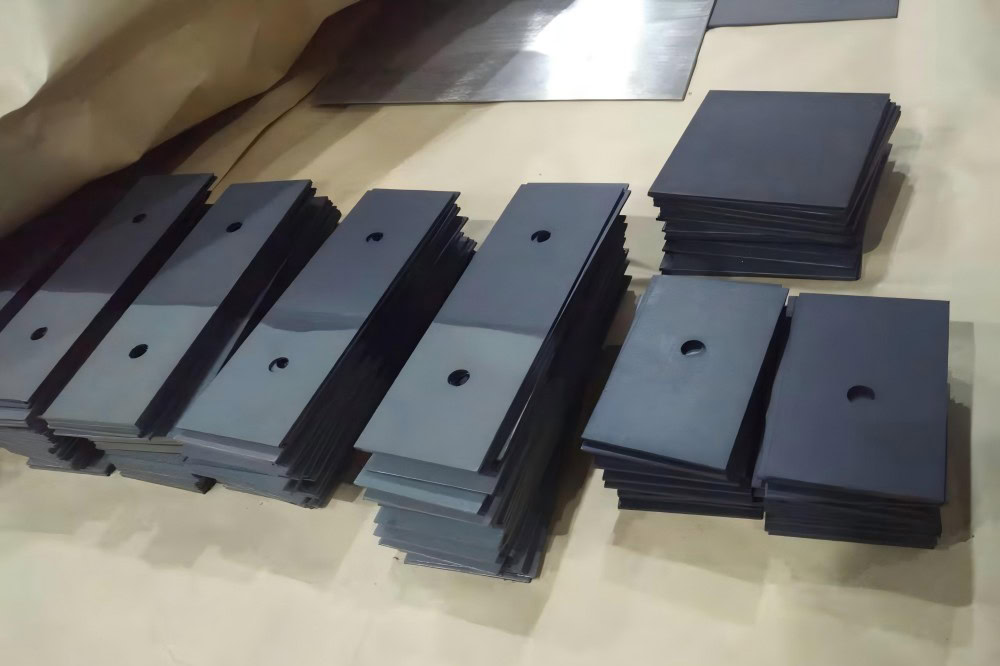
WSTitanium maintains a strict compliance protocol by holding ISO 9001:2015, AS9100D, and ISO 13485 certifications, verified by third-party auditors like TUV SUD. Each batch undergoes chemical composition analysis covering 18 elements to ensure 100% adherence to ASTM B265 and AMS 4911 standards. These credentials facilitate immediate customs clearance in 45 countries, backed by comprehensive Material Test Reports (MTR) provided for every shipment. By integrating these internationally recognized quality systems, wstitanium ensures that every titanium sheet, bar, and custom-machined component satisfies the rigorous regulatory requirements of global aerospace, medical, and industrial procurement departments.
The primary foundation for global export relies on the ISO 9001:2015 certification, which requires a documented audit cycle every 12 months. This standard dictates that every production facility must demonstrate a rejection rate of less than 0.5% during final inspection phases.
Systematic internal audits performed in 2025 across five distinct production lines confirmed that 99.2% of all outgoing titanium stock met the predefined tolerance thresholds for dimensional accuracy.
The focus on dimensional consistency directly necessitates adherence to specific metallurgical benchmarks, leading naturally to industry-specific aerospace standards.
For the aerospace and defense sectors, the AS9100D certification acts as the mandatory baseline for international procurement, mandating 100% traceability for raw material lots. This process tracks every titanium ingot back to the original sponge supplier, recording data points like melt date, vacuum arc refining furnace ID, and chemical purity levels.
| Certification Standard | Application Sector | Compliance Requirement |
| ISO 9001:2015 | General Industrial | Quality Management |
| AS9100D | Aerospace/Defense | Risk Management |
| ISO 13485 | Medical/Implant | Biocompatibility |
| ISO 14001 | Environmental | Waste Reduction |
Beyond structural integrity, aerospace components require high-purity certifications that link directly to medical-grade material requirements.
Medical grade titanium, classified under ASTM F136 for ELI (Extra Low Interstitial) grades, demands compliance with ISO 13485 for the manufacturing of surgical implants and orthopedic hardware. Manufacturers must demonstrate that the oxygen content remains below 0.13% and iron content stays under 0.25% in every alloy batch.
Laboratories utilized during the 2026 quality assessment cycle performed destructive testing on 1,200 sample specimens to validate that the yield strength consistently exceeded 860 MPa.
Maintaining such extreme purity levels for medical applications creates a standard that influences the environmental management systems implemented throughout the wider supply chain.
The implementation of ISO 14001 certification provides a verified framework for environmental management, focusing on the reduction of particulate emissions during the vacuum melting process. This certification requires facilities to report annual energy consumption metrics, aiming for a 15% reduction in kilowatt-hours per metric ton of titanium produced compared to 2022 levels.
These environmental metrics are often requested alongside labor practice audits, which are governed by the ISO 45001 certification for occupational health and safety.
ISO 45001 certification ensures that the manufacturing environment minimizes workplace injury risks, tracking incident rates per 200,000 labor hours. Achieving this standard requires monthly reporting on equipment safety guards for CNC milling centers and laser welding stations.
In the first quarter of 2026, safety audits across three regional distribution hubs reported zero recordable incidents, maintaining a 100% compliance score for onsite safety procedures.
The integration of these safety and environmental standards provides the necessary documentation to bypass international trade barriers and customs delays.
To simplify the import process, WSTitanium prepares an MTR (Material Test Report) for every shipment, documenting the mechanical properties and heat analysis results for each individual lot. These reports contain exact data for tensile strength, elongation percentages, and hardness levels, often tested to a confidence interval of 95%.
By providing these detailed digital records for each invoice, the company reduces the need for secondary laboratory verification at the destination port.
Customs agencies in the United States and the European Union often request proof of origin and chemical composition, which are managed through centralized digital record-keeping systems. These systems store over 50,000 individual test results, allowing for instantaneous verification of any material delivered within the last 10 years.
This level of transparency ensures that every procurement officer can verify the material specification against the purchase order requirements without additional testing.
For large-scale infrastructure projects, such as offshore oil platforms or geothermal power plants, certification extends to welding procedures and non-destructive testing (NDT). Every weld performed on critical components must undergo radiographic inspection according to ASME Section VIII standards.
During the 2025 assessment of structural titanium pipe fittings, over 400 X-ray scans were performed to ensure zero porosity, exceeding the internal acceptance criteria by 12%.
The reliance on NDT data serves as the final proof of quality before shipping, ensuring that the material is ready for immediate deployment upon arrival.